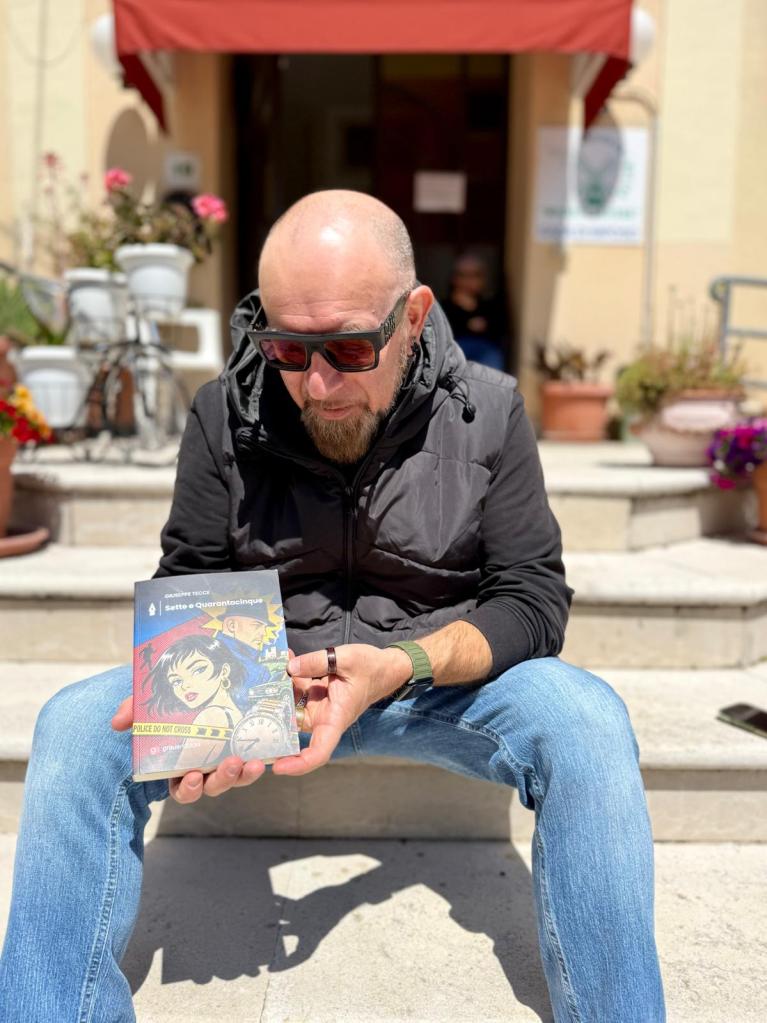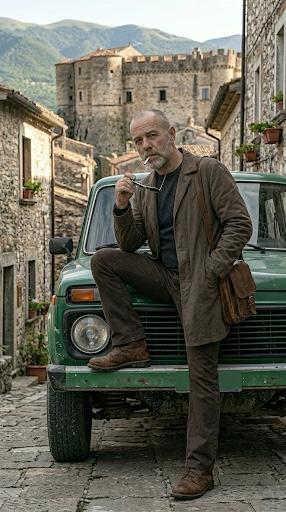
Mimì Gagliardi comes back to Gesualdo with two suitcases and a ghost. The heavier one he carries inside: Lucrezia Santini, the blonde woman who keeps knocking at the door in his dreams every night, ever since he left Milan. His guilt takes the shape of a recurring nightmare, and he always wakes at seven forty-five.
Mimì is fifty-three years old. He has a battered old green Range Rover he calls “il Verdone,” a smoking habit that doubles as a philosophy of life, and a profession he loves the way you love something uncomfortable: local journalism. He is the voice that tells the small stories of a vast land — the Eastern Irpinia stretching from Gesualdo along the old State Road 303 to the distant ridgeline of the Picentini mountains.
One summer morning, a woman dies in circumstances that look like an accident. Then a farm burns down. Then a landfill. Then someone in an unlicensed black pickup truck rams his car three times on a dark stretch of road. Nothing ever happens in Gesualdo — and yet, in the space of a few days, everything does.
Mimì begins pulling at threads: a woman with a hidden past, a child left in the care of her closest friend, a priest who recorded a confession and doesn’t know what to do with it, a politician in a blue suit who keeps turning up in all the wrong places. The pieces fall into place, but the picture they form is one of a small, vicious power — the kind capable of inflicting serious harm in a place where everyone knows everyone, and everyone thinks they know everything.
Seven Forty-Five is a provincial noir that smells of threshed grain and strong coffee, of Irpinian dialect and ancient stone. It is the opening chapter of a trilogy set in Eastern Irpinia: three books, one protagonist, and a land that is always, in its own right, a character in the story.